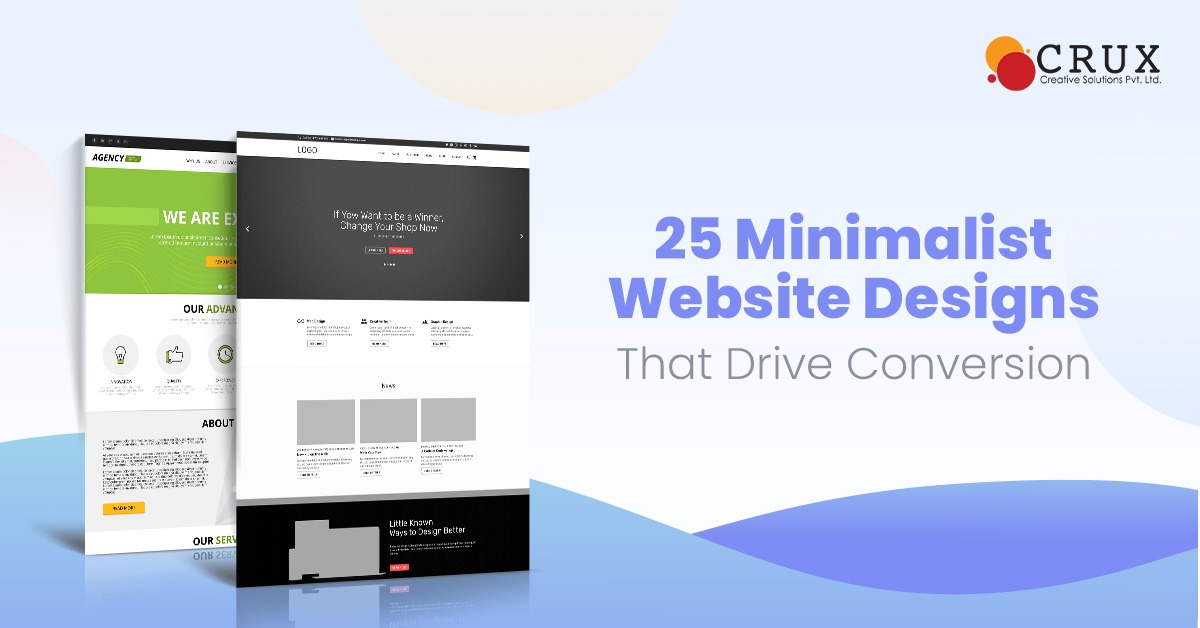
25 Minimalist Website Designs That Drive Conversion
Website Designs That Drive Conversion
Your website gets traffic, but visitors aren't converting. They land on your homepage, scroll aimlessly through cluttered pages filled with competing messages, flashy graphics, and confusing navigation—then leave without taking action. Despite investing in paid advertising and SEO, your conversion rates remain frustratingly low. You're losing potential customers not because your offer isn't compelling, but because your website is overwhelming them.
Every day, thousands of potential customers visit websites that actively work against their success. Pop-ups interrupt reading flow. Auto-playing videos demand attention. Dozens of navigation options create decision paralysis. Multiple calls-to-action compete for clicks. This visual chaos doesn't just annoy visitors—it costs businesses millions in lost revenue. Research shows that 38% of people will stop engaging with a website if the content or layout is unattractive. Worse, 88% of online consumers are less likely to return after a bad user experience. Your cluttered website isn't just failing to convert—it's damaging your brand reputation and sending customers straight to competitors who make decision-making effortless.
Enter minimalist web design—the antidote to conversion-killing clutter. By stripping away everything except what truly matters, minimalist websites create clear pathways to conversion. They eliminate distractions, reduce cognitive load, and guide visitors naturally toward desired actions. The result? Higher conversion rates, faster load times, better user engagement, and increased revenue. Let's explore how the world's most successful companies use minimalist design principles to turn casual visitors into paying customers.
The Power of Less
Minimalist design isn't about creating sparse, empty spaces. Rather, it's about intentionality. Every element serves a purpose. Each color choice, font selection, and whitespace allocation contributes to guiding visitors toward a specific action. This focused approach eliminates decision paralysis, a common conversion killer that plagues cluttered websites.
Consider how Apple's website operates. Clean product imagery dominates the screen. Brief, compelling copy communicates value instantly. Clear call-to-action buttons stand out without competing for attention. The result? One of the highest-converting e-commerce platforms in existence.
Why Minimalism Drives Conversions?
Cognitive load theory explains the psychology behind minimalist effectiveness. Human brains can only process limited information simultaneously. When websites bombard visitors with excessive choices, competing messages, and visual clutter, decision-making becomes overwhelming. Minimalist designs reduce this cognitive burden, making it easier for users to complete desired actions.
Speed plays another crucial role. Minimalist websites typically load faster due to fewer elements, reduced scripts, and optimized assets. Page speed directly correlates with conversion rates—even a one-second delay can decrease conversions by seven percent. By eliminating unnecessary components, minimalist designs inherently perform better.
Read Also : You Should Know About Business Website Design
Key Elements of Conversion-Focused Minimalism
- Strategic whitespace creates breathing room that draws attention to important elements. It's not wasted space; it's an active design tool that directs the eye and emphasizes priority content. Generous margins around call-to-action buttons increase click-through rates by making targets more visually accessible.
- Typography hierarchy becomes paramount when visual elements are limited. Headers must clearly differentiate from body text. Font choices should enhance readability while reflecting brand personality. Many successful minimalist sites use just two typefaces—one for headlines, another for body copy—creating consistency without monotony.
- Limited color palettes strengthen brand recognition and reduce visual confusion. The most effective minimalist designs typically employ three to five colors maximum. One dominant color establishes brand identity, while accent colors highlight interactive elements and calls-to-action. This restraint creates visual harmony that feels professional and trustworthy.
- Read Also : 9 Biggest Web Design Mistakes to Avoid That You Should Know
Real-World Success Stories
- Dropbox revolutionized its conversion rate by embracing minimalism. Their homepage features a simple value proposition, clean product visualization, and a single prominent sign-up button. No complicated feature lists. No overwhelming navigation menus. Just clarity. This redesign contributed to exponential user growth during their scaling phase.
- Medium's platform exemplifies content-focused minimalism. Articles display with generous line spacing, comfortable reading widths, and minimal distractions. Readers engage longer because nothing competes for their attention. The streamlined experience has made Medium a preferred publishing platform for millions of writers and readers.
- Stripe's website demonstrates how technical products can benefit from minimalist approaches. Despite offering complex payment infrastructure, their site uses simple animations, clear explanations, and abundant whitespace to make sophisticated technology feel accessible. This approach has helped them become a multi-billion dollar company.
Implementing Minimalism Without Losing Personality
Minimalism doesn't mean boring. Many brands successfully inject personality through strategic design choices. Mailchimp uses playful illustrations sparingly, creating memorable moments without overwhelming users. Their minimalist interface paired with occasional whimsical touches builds emotional connection while maintaining usability.
Photography offers another avenue for personality within minimalist frameworks. Large, high-quality hero images communicate brand values instantly. Airbnb leverages this approach brilliantly, using stunning destination photography that inspires wanderlust while keeping interfaces clean and navigable.
Micro-interactions add delight to minimalist designs without cluttering them. Subtle hover effects, smooth transitions, and gentle animations provide feedback that enhances user experience. These small touches make interfaces feel responsive and alive while maintaining visual simplicity.
The Role of Professional Development
Creating minimalist designs that convert requires expertise beyond basic aesthetics. Understanding user psychology, conversion optimization, and technical performance proves essential. This is where partnering with experienced professionals makes a difference. A skilled website development company gurugram can implement minimalist principles while ensuring technical excellence, from load time optimization to responsive design implementation.
The best website development in gurgaon teams understand that minimalism serves business goals, not just design trends. They conduct user testing to validate design decisions, analyze conversion funnels to identify friction points, and iterate based on real performance data. This evidence-based approach ensures minimalism enhances rather than hinders conversion goals.
Measuring Minimalist Success
Conversion rate stands as the primary metric, but other indicators matter too. Bounce rate typically decreases when users find what they need quickly. Time on site may increase as friction reduces. Page load speeds improve with fewer elements to render. Heat maps reveal whether simplified designs successfully direct attention to priority elements.
A/B testing validates minimalist choices. Testing simplified navigation against traditional menus, evaluating single-column versus multi-column layouts, and comparing minimal versus detailed product pages provides concrete evidence of what works for specific audiences. Data-driven iteration refines minimalist approaches for optimal performance.
Read Also : 9 Elements of a Good Web Design
The Future of Minimalist Web Design
As internet speeds increase and screen sizes diversify, minimalism's importance only grows. Mobile-first design naturally aligns with minimalist principles—small screens demand prioritization and clarity. Voice interfaces and AI-driven personalization will further emphasize content over chrome, letting functionality shine through simplified interfaces.
Minimalist web design represents more than an aesthetic trend—it's a conversion optimization strategy backed by psychology, data, and proven results. By removing obstacles between visitors and desired actions, minimalist websites transform browsing into buying, curiosity into commitment, and traffic into revenue.

Princy Cycil
Meet Princy Cycil, Senior content writer of Crux, with 6 years of experience. She has written for tech, education, healthcare, finance, e-commerce, travel, FMCG, and lifestyle brands. A B.Com graduate, she started her career with accounting but realized she loves words more than numbers. She creates blogs, social media posts, and web content that connect and engage. When she’s not writing, she’s reading books, binge-watching Netflix, or sipping coffee.
Share: